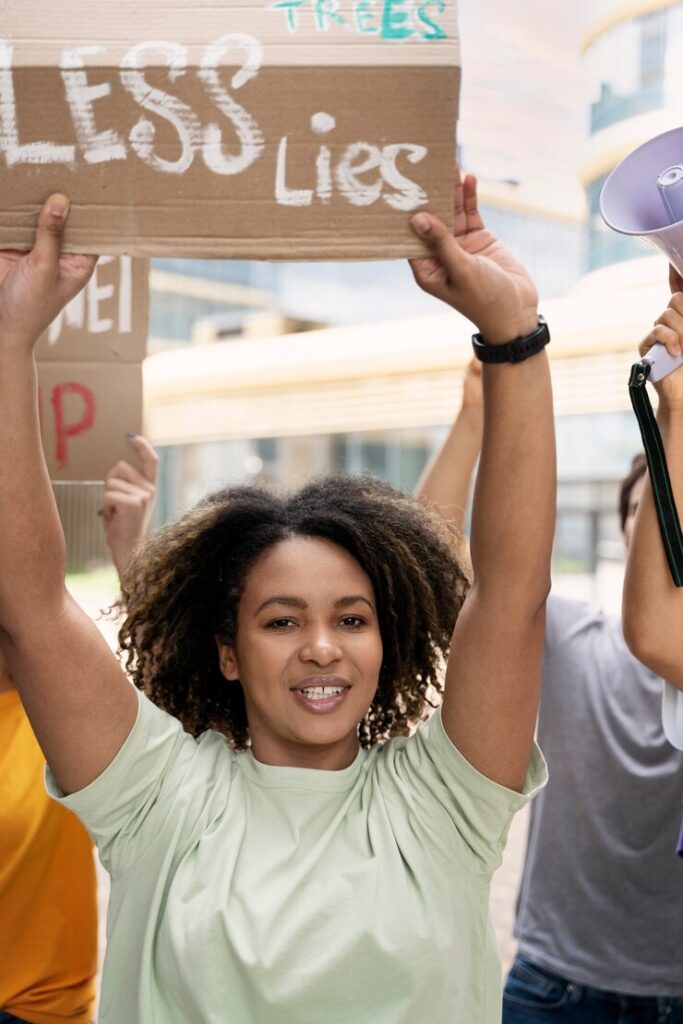
A Moment for Reflection, Accountability, and Action
Every year on March 8, the world pauses to honor women. We see parades, speeches, colorful fabrics, and messages of empowerment.
Yet behind the celebration lies a deeper purpose — one that is often forgotten.
International Women’s Day is not simply a day to celebrate women.
It is a day to take stock of progress in promoting women’s rights and to identify areas where urgent action is still needed.
A Tragedy That Reminds Us Why This Day Matters
This year, a tragedy in Cameroon reminded us why this day must be taken seriously.
A woman in Douala arrived at a major hospital in labor. She needed urgent care. Instead, she was turned away because she could not afford the consultation fee.
Hours later, she died.
Reports indicate that she was not attended to because she had no money and was left to die.
Her sister, desperate to save the unborn twins, performed an emergency caesarean section on the sidewalk in front of the hospital.
The babies did not survive.
This heartbreaking incident occurred just days after International Women’s Day celebrations.
While women marched in new uniforms, singing and dancing, one of their own lay dead outside a hospital door.
This contradiction forces us to confront an uncomfortable truth:
Symbolic celebrations mean nothing if women cannot access their most basic rights.
Why International Women’s Day Matters
International Women’s Day was created as a global accountability moment — a day to measure progress, confront failures, and renew our commitment to women’s rights.
It is a time to ask:
- What has improved in women’s lives this year?
- Where are women still being left behind?
- What urgent issues demand our attention?
- How can we ensure tragedies like the one in Douala never happen again?
This day belongs to all of us — women, men, NGOs, community leaders, and government institutions.
Each group has a role to play.
How We Should Commemorate March 8
1. Reflect on Progress and Gaps
Communities, organizations, and governments must evaluate what has improved and what has not.
2. Center the Voices of Vulnerable Women
Poor women, rural women, informal workers, and young girls must be at the heart of the conversation.
3. Demand Accountability
Governments and NGOs must report on their commitments and outline concrete steps for the year ahead.
4. Engage Men as Allies
Women’s rights strengthen families and communities.
Men’s involvement is essential.
5. Commit to Action
The day should end with clear priorities and action plans, not just performances and ceremonies.
Join the Conversation
This year, we are inviting women, men, youth, NGOs, and policymakers to join a WhatsApp conversation on how we can reclaim the true meaning of International Women’s Day — and how we can prevent tragedies like the one in Douala from ever happening again.
We want to hear from you:
- What does International Women’s Day mean to you?
- What needs to change?
- How can we do better?
👉 Join the conversation:
https://chat.whatsapp.com/GNMhhKTUMY63u702XWhVZw?mode=gi_t
Let Us Transform March 8
Let us transform March 8 into what it was always meant to be:
A day of reflection.
A day of accountability.
A day of action.